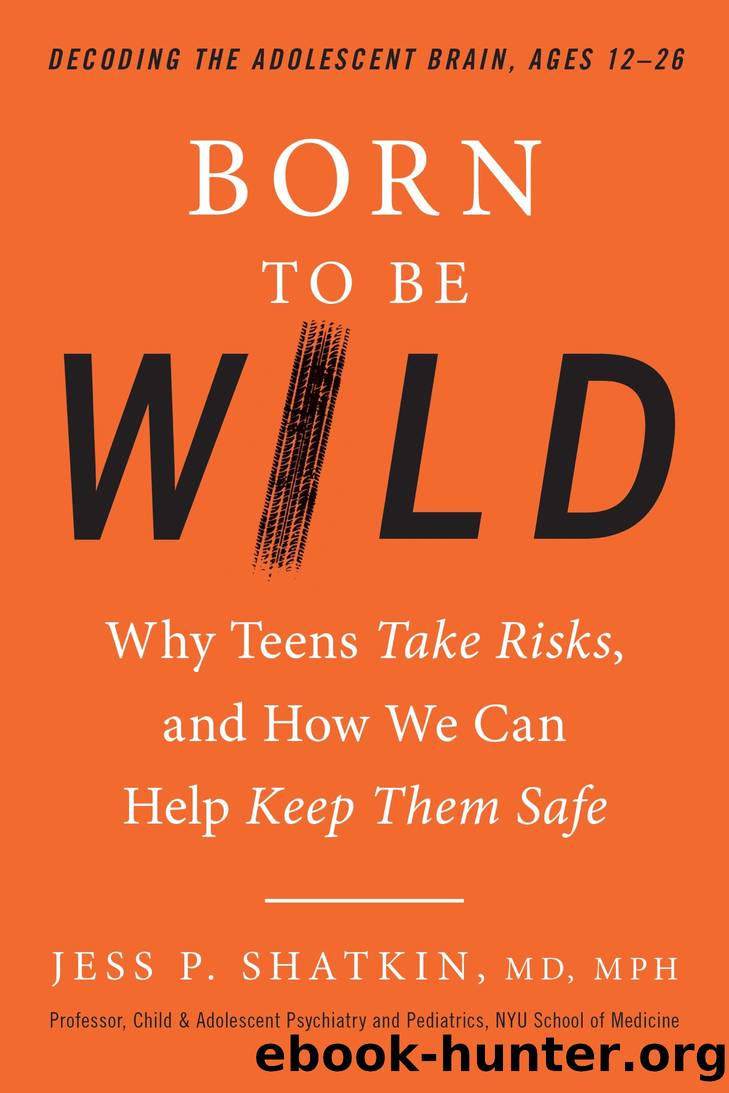
Born to Be Wild by Jess Shatkin
Author:Jess Shatkin
Language: eng
Format: mobi
Publisher: Penguin Publishing Group
Published: 2017-10-03T00:00:00+00:00
When it comes to risky decisions, less is generally more.
Lee Goldman is a physician who helped to pioneer the application of statistical methods to clinical medicine. Along the way, he came up with four simple measures to help determine which patients presenting to a medical emergency room with chest pain are at risk of an actual heart attack. His four measures include looking at the electrocardiogram readout, measuring blood pressure, listening to the lungs for signs of fluid, and assessing the subjective quality of pain felt by the patient. His criteria have been validated in numerous studies and are much more effective than typical clinical care in decreasing mortality. Similarly, expert cardiologists have been found to evaluate fewer cardiac risk factors compared to primary care doctors and medical students when trying to determine the appropriate level of care for patients presenting to hospitals with heart troubles. When it comes to risky decisions, less is generally more.
Gary Klein is a psychologist by training and a pioneer in the study of how people make decisions in real-life naturalistic settings, not in a lab. He began by studying fire chiefs, who are responsible for making rapid decisions on-site. In one of Kleinâs first studies, he tried to identify every decision point at which the chiefs deliberated between two or more choices, but he found that such deliberations occurred in only about one in nine decisions. âMost commonly,â Klein reported, âthe fire ground commanders claimed that they simply recognized the situation as an example of something they had encountered many times before and acted without conscious awareness of making choices at all.â When alternatives were considered, it was in situations where the chiefs had limited experience and expertise, and this resulted in slower decision making. Klein later went on to study how critical care nurses, nuclear power plant operators, pilots, battle planners, and chess masters make high-stakes decisions and found the same thingâexperts make rapid, high-risk decisions (like the decisions our adolescents face daily) using experience and intuition, not logical debate or by weighing the pros and cons.
Counterintuitively, our best decisions, particularly those with high stakes in high-pressure, risky situations, are generally made with less information. By knowing just what to look for and limiting the amount of information coming in, we make safer and more satisfying decisions. Unfortunately, however, not only do our adolescents lack experience, but our culture does little to help them limit the flow of incoming information.
About twenty years ago, Barry Schwartz, now professor emeritus at Swarthmore College and author of The Paradox of Choice, went to his local clothing store to buy some jeans. He gave the young salesperson his size and was presented with scores of options that he couldnât recall facing the last time heâd bought jeansââSlim fit, easy fit, relaxed fit, baggy, or extra baggy? Stonewashed, acid-washed, or distressed? Button-fly or zipper-fly? Faded or regular?â He felt overwhelmed.
Walk into a grocery store. How many salad dressings do you findâtwenty, thirty, fifty? Blue cheese or Italian is a much easier choice than selecting among scores of blue cheese and Italian dressings.
Download
This site does not store any files on its server. We only index and link to content provided by other sites. Please contact the content providers to delete copyright contents if any and email us, we'll remove relevant links or contents immediately.
Unwinding Anxiety by Judson Brewer(73044)
The Art of Coaching by Elena Aguilar(53249)
The Fast Metabolism Diet Cookbook by Haylie Pomroy(21143)
Rewire Your Anxious Brain by Catherine M. Pittman(18654)
Healthy Aging For Dummies by Brent Agin & Sharon Perkins RN(17045)
Talking to Strangers by Malcolm Gladwell(13370)
The Art of Thinking Clearly by Rolf Dobelli(10489)
Mindhunter: Inside the FBI's Elite Serial Crime Unit by John E. Douglas & Mark Olshaker(9342)
Crazy Rich Asians by Kevin Kwan(9291)
The Compound Effect by Darren Hardy(8966)
Tools of Titans by Timothy Ferriss(8394)
Periodization Training for Sports by Tudor Bompa(8271)
Becoming Supernatural by Dr. Joe Dispenza(8217)
Wonder by R. J. Palacio(8109)
Crystal Healing for Women by Mariah K. Lyons(7930)
Bodyweight Strength Training by Jay Cardiello(7917)
Change Your Questions, Change Your Life by Marilee Adams(7780)
Therapeutic Modalities for Musculoskeletal Injuries, 4E by Craig R. Denegar & Ethan Saliba & Susan Saliba(7722)
Nudge - Improving Decisions about Health, Wealth, and Happiness by Thaler Sunstein(7706)
